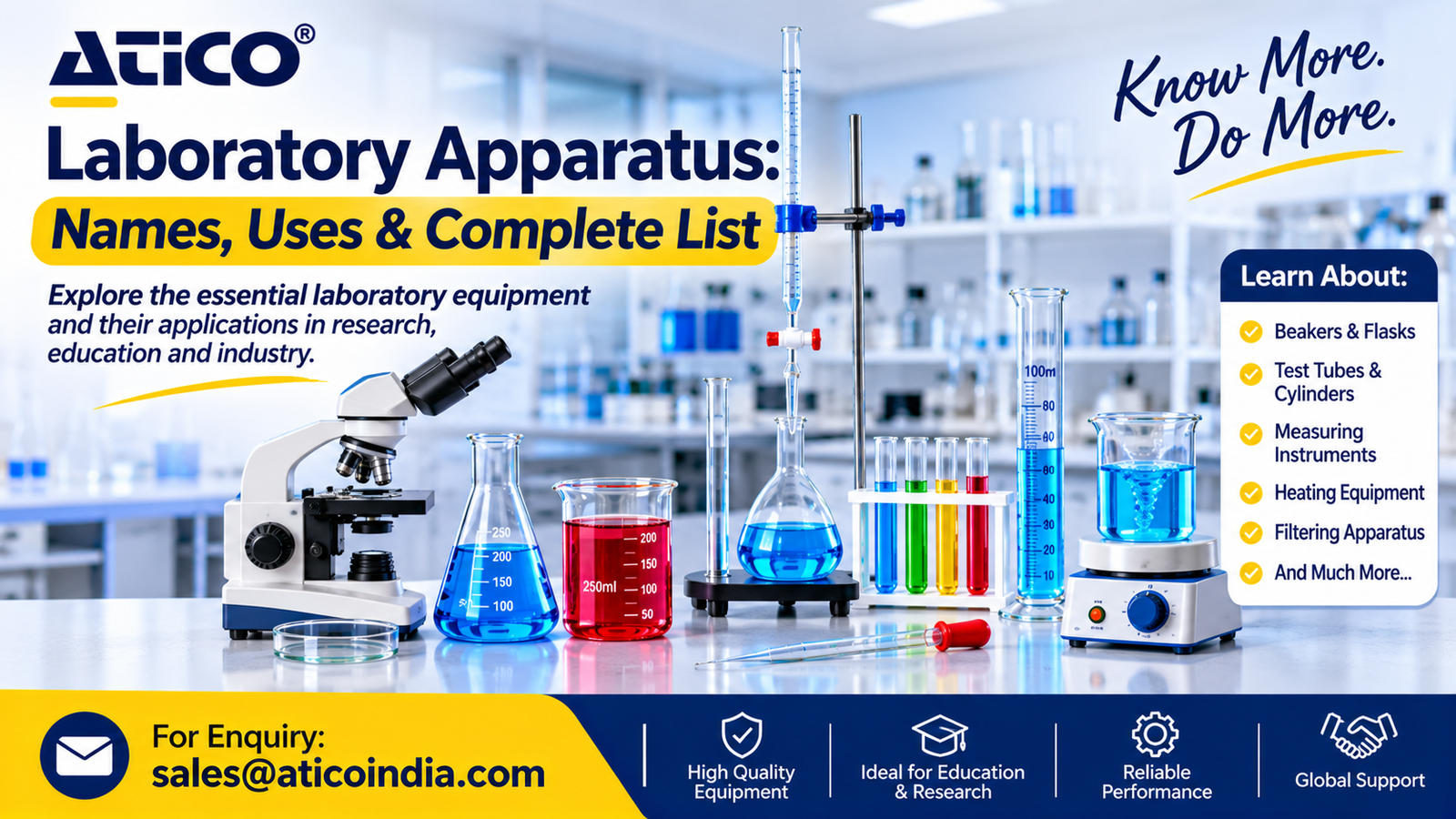
Laboratory work becomes much more convenient if one understands the task to be carried out and the intended use of the equipment.
In a lab operation or while setting up a new lab, it is necessary to know laboratory apparatus names and uses. While a beaker may be used to contain and stir a mixture, a burette may be used to introduce a certain amount of substance in the process of titration, and a microscope may be used to observe objects that are invisible to the naked eye. The knowledge about the laboratory equipment and uses would be beneficial for students, teachers, researchers, and people organizing a laboratory of sciences.
What Is Laboratory Equipment?
Laboratory equipment: Tools, instruments, glassware, and equipment used for conducting experiments, measurements, handling specimens, and researching scientific phenomena. There are simple items of equipment such as test tubes and funnels. But there are also complicated ones, including microscopes, balances, and measuring electrical appliances.
It is all about the experiment. A chemistry laboratory requires tools to handle chemicals and prepare solutions, and a biological laboratory requires equipment to examine specimens.
Lab Glassware (Names and Uses)
Glassware is used in most of the laboratories of chemistry. It is used to measure, transfer, heat, mix, and store liquids. Lab applications usually involve good thermal and chemical stability, so borosilicate glass is often used. The glass should be appropriate for the chemical and temperature.
A list of laboratory apparatus that is commonly used are:
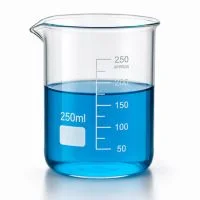
Beaker: is used for holding, mixing and heating liquids. It is not designed for high precision readings, but rather approximations.
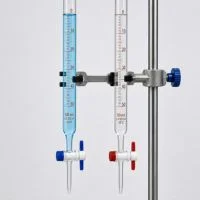
Burette: Provides a measured amount of liquid in a titration experiment.
Useful for swirling and mixing solutions without risk of splashing, due to its narrow neck.
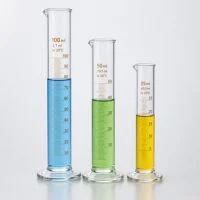
Measuring cylinder: A better way of measuring volumes of liquid than an ordinary beaker.
Pipette: Transfer small amounts of liquids. Volumetric pipettes are used for a fixed volume, and graduated pipettes are used for various volume settings.
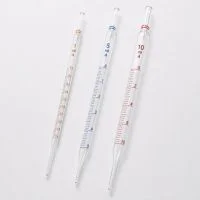
Test tube: A small tube used in a lab to hold and react small quantities of substances for observation or heating.
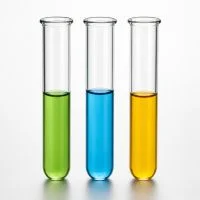
Volumetric flask: Used to prepare solutions to a known volume, such as preparation of standard solutions or dilution.
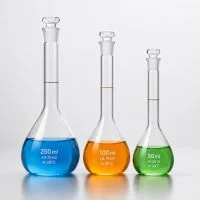
Funnel: Pours liquids or powders into containers with small openings. Filter paper is another material that can be used for filtration.
Other glassware is used for the storage of chemicals, cooling of vapors during distillation, and for stirring solutions, such as glass rods.
Heating and Measuring Apparatus
Routine lab work includes heating and measuring. There are experiments that need to be controlled where the heating is concerned and there are experiments that rely on accurate readings of mass, temperature or volume.
Bunsen burner: Generates a flame of heat to be used for heating suitable laboratory materials.
Hot plate: Used to heat the sample and solution without an open flame.
Tripod stand: Used to support the vessels when heated above a burner.
Water bath: This is the lab equipment that provides heat for boiling water in a pot of glassware.
Adapters: Used to attach the glassware to the heat source.
Analytical balance: Used to determine small masses with great accuracy for analysis.
Electronic balance: Used to determine the mass of chemicals, samples, and other materials in routine experiments.
Thermometer: An instrument that measures temperature, used for measuring the temperature of a liquid, gas, or laboratory environment, depending on its construction.
It is always important to choose the heating equipment based on the material. Not all glass containers can be directly exposed to the flame.
Holding, Mixing, and General Apparatus
There are certain lab activities that need supporting equipment. Other activities like transfer of solids or handling of hot equipment also require supplementary equipment. Though they might appear simple, but these tools ensures that experiments are organized and safe.
Retort stand: A retort stand is an apparatus holder that makes other equipment stationary during experiments.
Clamp and boss head: This is commonly used to secure burettes, flasks, condensers, and other equipment.
Test tube stand: Supports test tubes during experiments and storing them.
Tongs: Handle hot glassware, crucibles, and other heated objects.
Graduated cylinder: Graduated cylinders measure small amounts of liquid.
Crucible: Used to contain solid samples during high-temperature heating. Different types of specialized materials, such as porcelain and quartz, are used as per the application.
Watch glass: Holds small samples, covers beakers, or allows small quantities of liquid to evaporate.
Pipette: Adds or transfers small volumes of liquid, typically in drops or mL (milliliters).
Wash bottle: This is the bottle that is used to rinse laboratory vessels. Washing is done with distilled or deionised water.
Beaker: Beakers are very common lab equipment. These are used for holding liquids and other substances during different experiments.
Every lab has laboratory equipment and uses such tools during experiments.
Apparatus by Subject (Quick Reference)
Every list of laboratory apparatus subject-wise should be defined very carefully. Below is a handy catalogue of equipment with lab apparatus names for different science subjects:
Physics
Capacitor: Stores electrical energy, which is released when it discharges.
Diode: they allows current to pass in one direction only.
Barometer: these instruments are used to measure air pressure.
Galvanometer: Instrument that detects and measures small electric currents.
Lens and prism: Illustrate refraction, dispersion, and other optical properties.
Pendulum apparatus: Used to study periodic motion and to measure time.
Sonometer: To show the relationship between tension, length, and frequency in a vibrating wire.
Ammeter: Measures current from one point in a circuit to another.
Atico Scientific's physics range encompasses the following areas of physics: mechanics, electricity, electronics, optics, heat, measurement, fluid mechanics, and modern physics.
Chemistry
Beaker: Used for measuring and/or holding liquids.
Crucible: Produces fire for melting substances
Evaporating flask: Used to evaporate solvents from a solution.
pH meter: Used to determine the acidity or alkalinity of a solution.
Separating funnel: To separate immiscible liquids into separate layers.
Wash bottle: Used to rinse glassware with distilled water.
Chemistry lab products by Atico Scientific include every list of laboratory apparatus for chemical experiments.
Biology
Dissect biological specimens: Assist in examining and separating specimens.
Microscope: Magnifies small objects like microorganisms and cells.
Vacuum Impregnation: Impregnates the tissue using a vacuuming method.
Petri dish: Container used to culture and examine specimens.
Mounted slides: Give students the opportunity to look at biological structures under the microscope.
Specimen models: Show anatomy, plant structure, and plant biological systems.
Atico Scientific's biology range consists of botany models, zoology models, human anatomy models, dissecting tools, educational charts, environmental instruments, microtomes, and staining equipment.
Where to Buy Laboratory Apparatus: Manufacturer vs Trader
The range is not the only thing when it comes to buying laboratory equipment. Other factors to take into account for buyers include specifications, material quality, calibration needs, availability, and support.
The trader can purchase inventory from various manufacturers, which can be helpful for comparison of various brands. Purchasing from a manufacturer, on the other hand, can simplify things when it comes to product specifications, bulk orders, customization, and institutional orders.
Since 1954, Atico Scientific has been providing scientific and educational equipment. We provide manufacturing, supply, and export of equipment for various laboratory tasks in physics, chemistry, biology, and other fields. Our product range is suitable for schools/colleges, universities, research centres and industrial laboratories.
Talk to our team about your requirements for individual items of glassware or equipment for a whole laboratory. We can advise you on appropriate products and provide information on inquiries for bulk or project usage.
FAQ
What are the most common lab apparatus?
Beakers, test tubes, measuring cylinders, pipettes, burettes, flasks, funnels, thermometers, balances, microscopes, and burners are laboratory equipment that are commonly used.
Which apparatus is used to measure liquid volume accurately?
Volumetric pipettes, burettes, and volumetric flasks are used for measurements of volume. Markings on measuring cylinders are suitable for routine measurements, and beaker markings are in general approximate.
What is the difference between laboratory glassware and general apparatus?
Glassware consists of beakers, flasks, burettes, and test tubes. Other general apparatus includes stands, clamps, burners, balances, microscopes, and other instruments.
Where to get laboratory equipment in India?
You can contact Atico Scientific for laboratory glassware, chemistry, physics, and biology equipment. Look at the product categories at www.aticoscientific.com or send an inquiry for your needs.
Build Your Laboratory with the Right Equipment
Not all laboratory instruments are necessary for a good laboratory. It requires proper equipment for its experiments, users, and goals. A place to start these decisions is to know the names and uses of the laboratory apparatus. We assist institutions in finding scientific and educational equipment that can be used in daily science experiments, classroom demonstrations, and specialized lab work at Atico Scientific.
0 Replies to “Methods of the recruitment”